

It is no exaggeration to say that the breakthrough in AI technology has taken us to a critical moment in human history. Depending on who you listen to, AI technology is going to be a tremendous force for good or catastrophically bad. There is little in between. But either way, whether you like it or not, AI is here to stay. The challenge we have now is one of utility. As with every other tool, the way it is utilised by humans dictates the pros and cons, the good and bad.
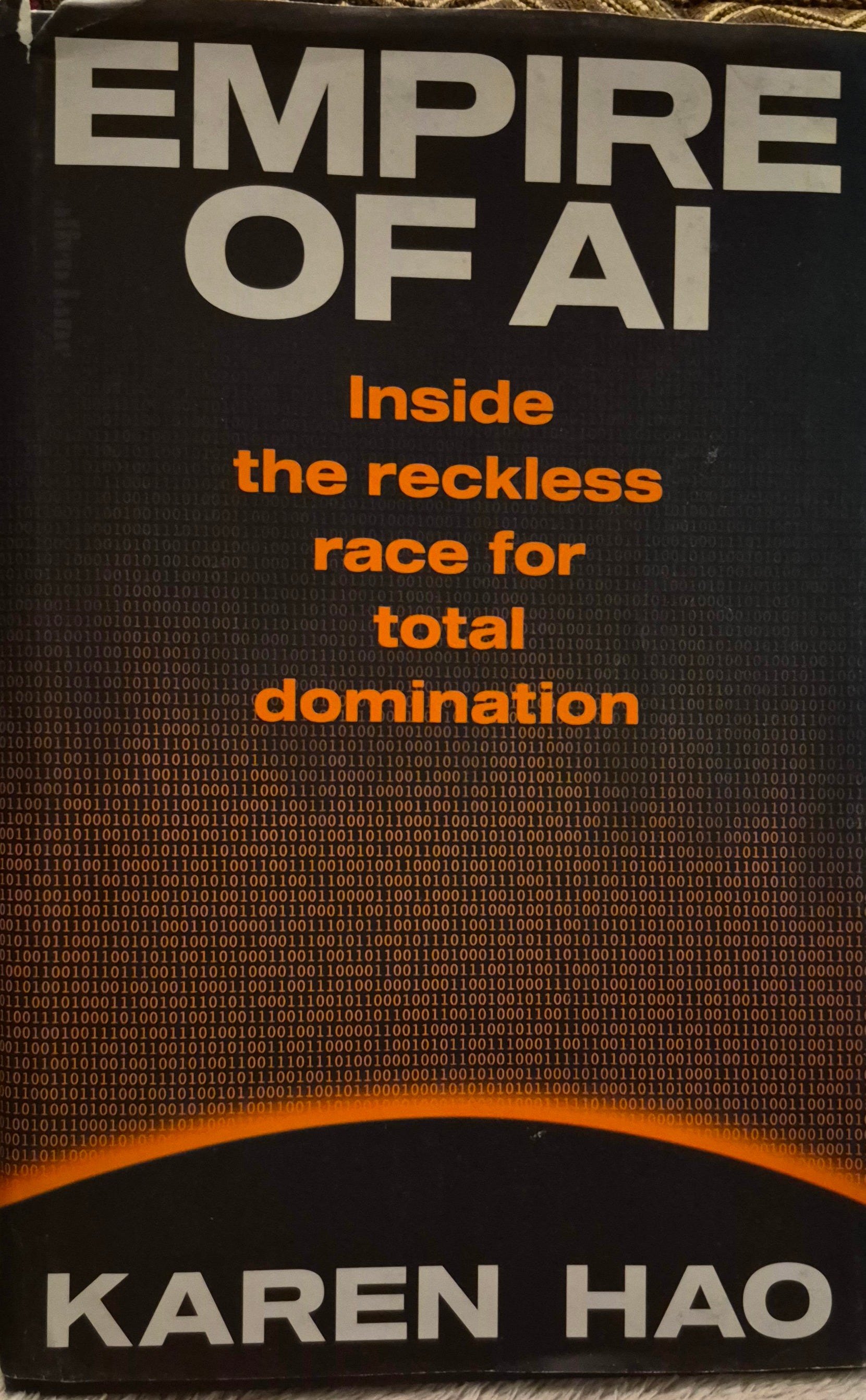
In her book, Empire of AI, Karen Hao shows us how the current utilisation of AI is having a hugely detrimental effect on our world. Focusing primarily, but not exclusively, on OpenAI, Hao’s research and investigations expose the (changing) practices of the men currently in ownership of the technology.
It is a disturbing read, though one that is as fascinating as it is infuriating. With contributions from numerous sources, Hao isn’t writing neither opinion or from hearsay. Contributors include those working for OpenAI and the volatile and unpredictable Sam Altman, and people around the world, in places as far and wide as Venezuela and Kenya, who have been routinely exploited by AI companies.
We are also given an education into the effects AI technology is having on the environment, on communities, and even on language. And though the book ends on a fairly optimistic note, with a reminder of how AI can be used more sensibly and more beneficially, it is on the whole very much a confirmation of the trouble we are in if we carry on ignoring the threat posed by these empires of AI. Put simply, this technology cannot remain in the hands of a small elite of rich boys exhibiting deeply troubling behaviours.
Though there are many things from this book that can be honed in on, my personal takeaway is of further evidence into my belief that competition in such high-risk and/or critically important sectors is both morally and ethically wrong. As we see time and time again across the board of industry, when endeavours are pursued for profit, and when that pursuit is in competition with another, rush jobs, disregard for anything that holds up targets, such as health and safety and consideration of the wider world, becomes on irrelevance. The goal of making profit is paramount.
Like healthcare, water supply, and food distribution, AI technology should not be left for private companies to compete over. The risks are simply to high, whereas the positives of the alternative - one shared collective of people all capable of having an input out of consideration for humanity and life on Earth as a whole - are too great.
But that is just my own overriding thought after reading the book. I also have many others, all of which point to figures like Altman as being unfit for a task that could determine the fate of everything in the coming decades and centuries.