

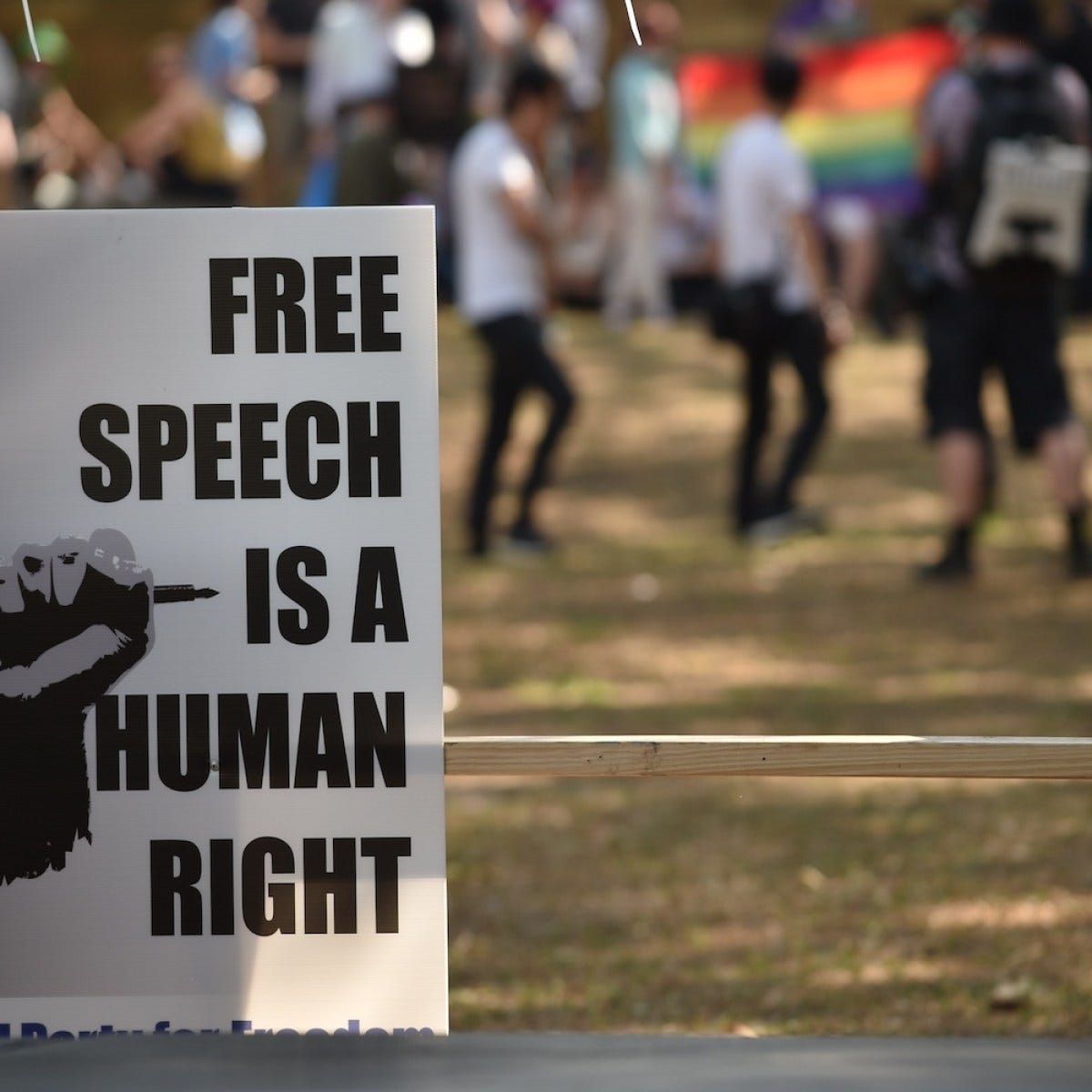
Article 10 of the Human Rights Act (1998): Freedom of Expression
1. Everyone has the right to freedom of expression. This right shall include freedom to hold opinions and to receive and impart information and ideas without interference by public authority and regardless of frontiers. This Article shall not prevent States from requiring the licensing of broadcasting, television or cinema enterprises.
2. The exercise of these freedoms, since it carries with it duties and responsibilities, may be subject to such formalities, conditions, restrictions or penalties as are prescribed by law and are necessary in a democratic society, in the interests of national security, territorial disorder or crime, for the protection of health or morals, for the protection of the reputation or rights of others, for preventing the disclosure of information received in confidence, or for maintaining the authority and impartiality of the judiciary.
This section of the Human Rights Act (1998) establishes the legal foundation for “free speech” as a qualified right within a framework of duties, responsibilities, and democratic accountability. Yet in recent years this understanding has become disjointed. The concept of free speech - contextualised within the parameters of the freedom of expression principles laid out in 1998 - has been taken from its social and legal reality and turned into something else entirely. That “something else” has been created via reification, a product akin to what Marx referred to as the fetishism of commodities, or commodity fetishism.
Commodity fetishism, Marx explains, is the process by which social relations between people come to appear as relations between things. Labour, exploitation, class antagonism, all of these vanish, leaving the illusion that commodities possess intrinsic value. Or in Marx’s words:
“A commodity is therefore a mysterious thing, simply because in it the social character of men’s labour appears to them as an objective character stamped upon the product of that labour… This I call the fetishism which attaches itself to the products of labour.”
In the digital economy, this fetishism extends beyond material goods. Attention itself becomes the commodity, while our emotions - outrage, envy, belonging - serve as the raw materials extracted, processed, and sold back to us through algorithmic systems.
While billionaire-owned platforms pose as neutral guardians of information, they profit from outrage and disinformation. Their algorithms, as we shall see, simultaneously suppress some voices while amplifying others, shaping discourse according to what generates engagement and, therefore, profit.
Politicians, political commentators, journalists, and others with vested interests, predominantly from the political right, exploit these same platforms to invoke “free speech” as a means to defend racism or conspiracy, while enforcing censorship in classrooms, libraries, and protests in the real world. Meanwhile, media grifters cultivate a lucrative sense of victimhood around “cancel culture,” paradoxically broadcasting their supposed silencing to millions. Even “celebrities” accused of crimes including sexual assault have been able to reinvent themselves in an online space, portraying themselves as anti-establishment victims of conspiracy, as opposed to the self-entitled opportunists they are.
In effect, the digital universe has tangled up the real with the unreal. Paradoxes, ironies, misinterpretations, miscomprehensions and speculations run wild in this environment. The concept of “free speech” is one such topic that has been swallowed up in the noise. Once an accepted principle with basic limitations, “free speech” has become devoid of nuance, rationality, or responsibility to objective truth, with historical grounding in struggles against censorship, authoritarian power, or state violence effaced and replaced by the illusion that “free speech” exists not as a value, but something of value, circulating as currency within what is known as the “attention economy.”
But before we expand on this economy, and the thriving culture wars that make it so profitable, we need to ask why this is. What is it that makes us so susceptible to sensationalism? And why is this susceptibility exploited by media platforms and outlets?
Various studies in this area have shown that emotional arousal, particularly emotions such as anger, fear, and moral outrage, significantly increases the likelihood of engagement and information sharing. This emotional arousal is triggered (“triggered” being the apt word here, being used as an online slur for those who show high levels of emotional responses to content they find provocative in some way) by dopamine and oxytocin releases and heightened activity in the amygdala - the brain’s emotional centre - which enhances memory formation and motivates further engagement with similar content.
Because of the competitive nature of media companies, battling for supremacy of a specific area of capitalist economy, traditional media headlines have, for a long time (as far back as the Penny Press publications of the 1830s), typically been designed to grab attention, or “to evoke strong emotional responses,” with sensationalism used “as a strategy to maximize attention and reader engagement.”[1]
Social media’s amplified replication of this strategy is an extremely curious one. Whereas traditional media has been developed to grab attention by design, in order to sell more copies of a newspaper or pull-in larger audiences than newsroom competitors, social media algorithms have actually learned, by way of their design, to promote content that draws in the most engagement, or in other words, that provokes the strongest emotional responses.[2]
Let’s be clear here, I’m not saying that tech bros sit in a room with their subordinates and say, “Design our algorithms to maximise outrage,” but they do talk about maximising user attention, engagement, and ad revenue. The algorithm’s goal, then, is to garner the most engagement possible – likes, comments, shares, time spent scrolling. These are all key metrics in the attention economy, with algorithms designed to be adaptive to user behaviour. Their core function is to learn what users do, what they like, and what they don’t like, to personalise a user’s feed in order to keep them “active” for longer. Effectively, algorithms are designed to study human behaviour, for the purpose of predicting, influencing, and ultimately monetising their attention.
For a number of years now, it has been apparent that algorithms have learned, as humans did centuries ago, that the way to maximise media engagement is to sensationalise content. The more sensational the story, the more emotional the human (consumer/reader/viewer/user) response. Because of this, social media algorithms seek to solicit emotional responses, not knowingly, of course, as sentient beings, but as processes designed and put in place to maintain platform usage. Any pattern of behaviour will therefore be optimised to increase engagement, encourage repetition, and reinforce the kinds of emotional responses that keep users returning, making outrage, fear, and moral panic the most profitable forms of content circulation.
The culture wars, and the broader fixation on cancel culture, are both amplified and monetised by algorithmic reinforcement, which rewards those who perform grievance most convincingly. To be “cancelled,” in culture war logic, is to be punished for telling an unpleasant truth. There must be something about the “cancelled” that a perceived established order doesn’t like, which therefore must be hidden, or banished, from mainstream discourse. As we know, the reality is very different. A person, generally a “celebrity,” is “cancelled” for being caught up in a scandal, or for being booted off a private company’s platform for violating said platform’s rules.
In essence, this culture of performative grievance is, as Sartre might put it, an act of bad faith - a refusal to acknowledge freedom’s accompanying responsibility. The obsession with free speech, particularly as invoked by the political right, is a purely dishonest one, driven by a sense of entitlement that demands the right to speak without consequence, and to dominate public discourse without critique.
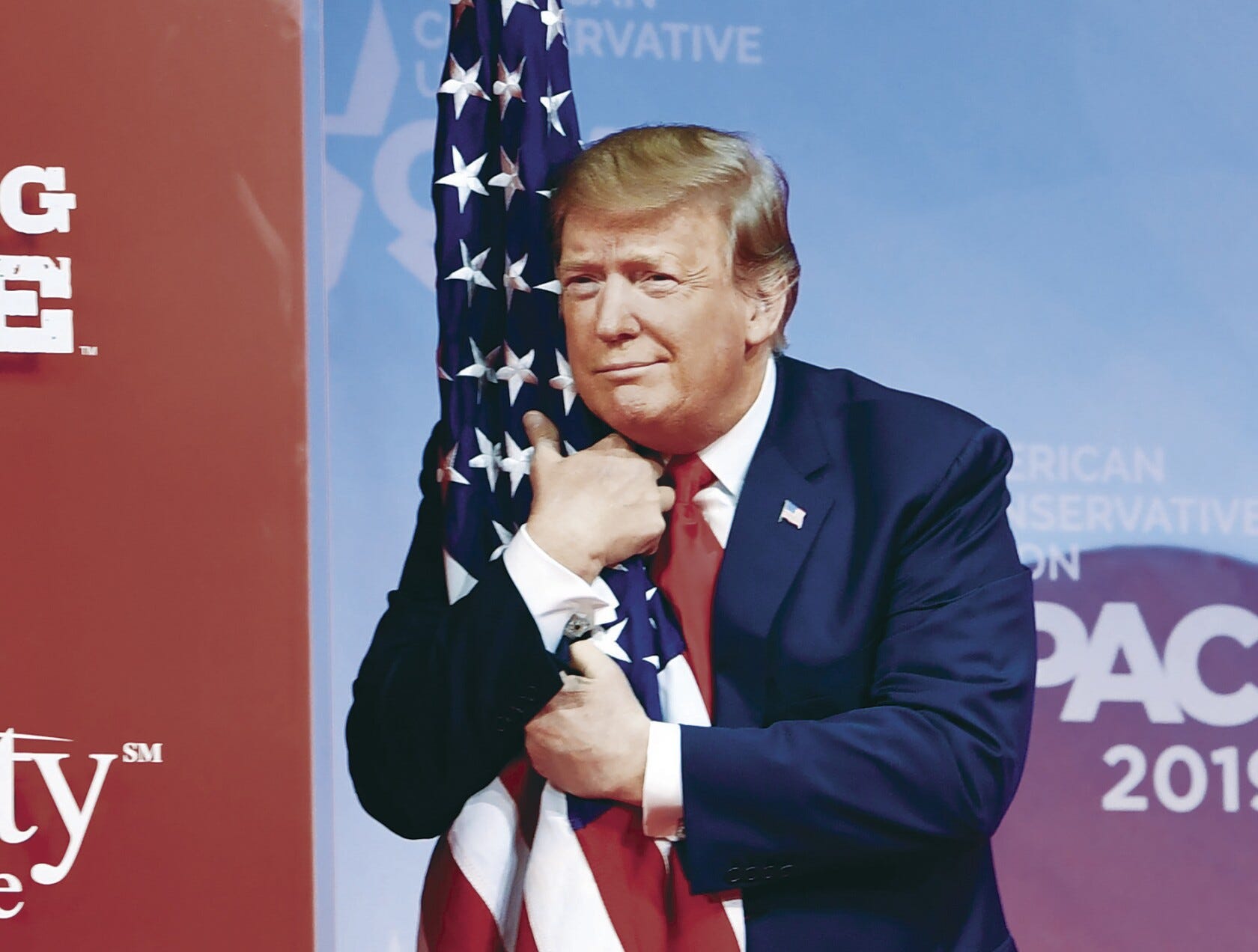
The ultimate embodiment of this entitlement is found in the politics of Donald Trump, who has, as we shall shortly see, demonstrated an acute understanding of what sells in political discourse. On the back of its enormous success, this brand of politics has gradually been adopted by seemingly everyone on the political right as a weapon with which to fight the culture wars. A crucial addition in recent years in the arsenal of the political right has been free speech, utilised to great effect across all forms of media by representatives of those who five, ten, or fifteen years ago began to notice what to them were significant social and cultural changes, who perceived themselves as a result as being part of a group with less of a say at the expense of people who, previously less visible, were now very much visible. More and more, ideas, opinions, and people they didn’t agree with were being heard through mediums hitherto dominated by the ideas, opinions, and people they did agree with, or at least could abide or cope with in small doses. The sight of black people in adverts, storylines in TV shows centred around gay people, the growing awareness and challenge to false narratives of colonial/imperial pasts, and, of course, the big one – the existence of trans people and the diminished capability to hide them away from public view.
Though most people narrow this base of support to middle-aged and older white people, the reality is far more nuanced and complex. Amongst the bigots and the prejudiced, there does exist legitimate voices seeking to understand a shared sense of loss. The problem here is that the sense of loss is diverted away from neoliberal/capitalist polices, the selling off and privatisation of all public services and the commons, the dismantling of community and solidarity as a collective, and towards the bogey men of immigration, “wokeness,” and various other distortions of truth related to mainstream media biases, the threat of communism from, of all places, the U.S. Democratic Party or the UK Labour Party. At a basic level, there is a large number of people in the Western world who have been convinced their enemy is the immigrant and the woke, not the billionaire. These are, beneath it all, the fragile and the in denial, whose anger is easier to harness than their ability to accept everything they have known to be a lie.
In figures like Nigel Farage, Elon Musk, Javier Milei, and, most of all, Donald Trump, they see a reflection of their own insecurity, able to dish out petty vengeful acts, to unleash an unhinged form of politics, who have the gift of the gab, the ability to make people believe that a declining cultural experiment (neoliberal capitalism), that has been proven to be an unsustainable model for human living, would work perfectly if only done without the annoying voices from all other areas of the political spectrum and their concerns about, say, equality. If this sounds familiar, it’s because the same logic has been for decades brazenly used as a stick with which to beat the left.
But it’s not as if Trump et al. are peddling a lie they don’t believe. Focusing on Trump specifically, there is nothing to suggest, from what we know of the man, and how the man has behaved in public for the last 50 years, that he doesn’t believe in the MAGA ethos. Trump’s ultimate weapon, the reason why he embodies his base, is because he is, in some ways, them. Of course, his base does not consist of billionaires born into wealth, but they are all believers in the American Dream, in capitalism, and who all feel hard done by, that America, and working, family-oriented people in general are getting ripped off, ridiculed, and disrespected. But the source of this disrespect, for both Trump and his base, is not the capitalists or the rich elites, of whom Trump is a prominent member, who dictate global finance and the economic states of countries. It is, rather, those bogey men - the immigrants, the liberal leftists, the “alphabet mafia”, Muslims, communists, socialists, the Chinese and etc, etc, etc, each being pointed to depending on the circumstances. Trump articulates the presence of the bogey men better than any other politician or public figure. He does this because he believes that they not only exist but are to blame. He isn’t a conspiracy theorist per se. He doesn’t create the theory; he hears about it and learns more about it from the source (usually a source of misinformation or disinformation).
What’s more, Trump has an instinct for peddling bullshit, developed over five decades of selling a brand of himself to the world. While politicians know they are, in effect, selling themselves as a product when courting public favour, Trump has done it better than anybody else. The man has been around the block, dabbled in various areas, picking up and developing ways of dealing with people on a transactional level. This experience and knowledge are key.
The greatest example of Trump’s ability to peddle bullshit is the “Make America Great Again” brand, which is actually second-hand usage, being originally associated with Ronald Reagan. But Trump’s adoption, and trademarking, of the “Make America Great Again” slogan, and it’s acronymization into MAGA, has been a stroke of marketing genius. Like all great marketing, MAGA has emotional framing. In this example, Trump is selling a fix to an America that has lost something vital. This loss is so great that it demands a sense of grievance and urgency. But, despite being so great, there is a quick and easy solution that can restore greatness. Trump, so the ad would go, is that solution.
This importance of emotional framing is laid out in one of the great TV shows from the noughties – Mad Men. In the very first episode, protagonist Don Draper tells us that “Advertising is based on one thing: Happiness.” MAGA comes straight out of this marketing philosophy, and Trump, having formed himself around about the time Mad Men is set, has clearly learnt a great deal about the philosophy of marketing that was developed in that time. Other Draperisms mirror Trumpist messaging - “You are the product. You feel something. That’s what sells.” - “If you don’t like what’s being said, change the conversation.” - “Make it simple, but significant.” In these statements we recognise a Trumpian way of communicating with the electorate, with an emphasis on selling back to them a sense of what has been lost, and a need to reclaim what has been lost, diverting attention away from one topic onto another through whataboutisms, and speaking and tweeting in a generally short, to the point, manner.
This is the genius behind Trump’s political success and the MAGA brand. Like free speech, MAGA has become commodity fetishism, a political identity transformed into a marketable object, detaching symbols like the red hat from material realities and class interests, and imbuing them with a false aura of power and belonging.
What makes Trump and the broader right’s success so significant in relation to free speech, as we have established, is not simply that they used it in defence of their prejudices, biases, and general stupidities, but that they recast it as the shield for reactionary grievance and the weapon to attack cultural change. They used it, in short, to play the victim. And in this framing, “free speech” has been utterly bastardised, no longer referring to protection from state interferences, but protection for those in power, and for those who benefit most from the social hierarchies of Western society, from social consequences.
[1] Mousoulidou M, Taxitari L, Christodoulou A. Social Media News Headlines and Their Influence on Well-Being: Emotional States, Emotion Regulation, and Resilience. Eur J Investig Health Psychol Educ. 2024 Jun 5;14(6):1647-1665. doi: 10.3390/ejihpe14060109. PMID: 38921075; PMCID: PMC11202588.
[2] https://workonpeak.org/social-media-algorithms-are-shaping-our-daily-lives/#:~:text=Personalization%20and%20Engagement,the%20visibility%20of%20sensational%20content.